· By WLAM
What is cooling fabric? Understanding qmax before you buy
"Cooling fabric", "ice silk", "cool touch"... plenty of sportswear promises a cool feel. But only one number can be measured and compared: the qmax value. This article explains what qmax is, how it's measured and how to read it.
What qmax measures
Qmax (written qmax in the standards) measures the instant cool feeling when skin first touches fabric. In the lab, a metal plate is warmed to near skin temperature (around 30°C) and placed on a cooler fabric sample. The instrument records the peak heat flow from the warm plate into the fabric at the moment of first contact, in W/cm².
The faster heat leaves the skin, the cooler it feels. So the higher the qmax, the cooler the fabric feels to the touch.
The concept was developed from the 1970s by Professor Sueo Kawabata (Kyoto University) as part of the KES fabric-hand evaluation system. The most common instrument today is the KES-F7 Thermo Labo by Kato Tech (Japan).
Standards and the "cool fabric" threshold
- JIS L 1927 (Japan), GB/T 35263-2017 (China) and CNS 15687 (Taiwan) are standards for measuring contact cool feeling.
- Under GB/T 35263, fabric needs a qmax of 0.15 W/cm² or more to be considered cool to the touch.
- China's knitwear standard FZ/T 73067-2020 sets higher grades: 0.18 (pass), 0.20 (first class) and 0.25 W/cm² (premium).
What qmax doesn't tell you
- It's only the feeling on contact. Qmax measures the first moment, not how well the shirt keeps you cool all session. Breathability and fast drying decide how it feels after 30 minutes of play.
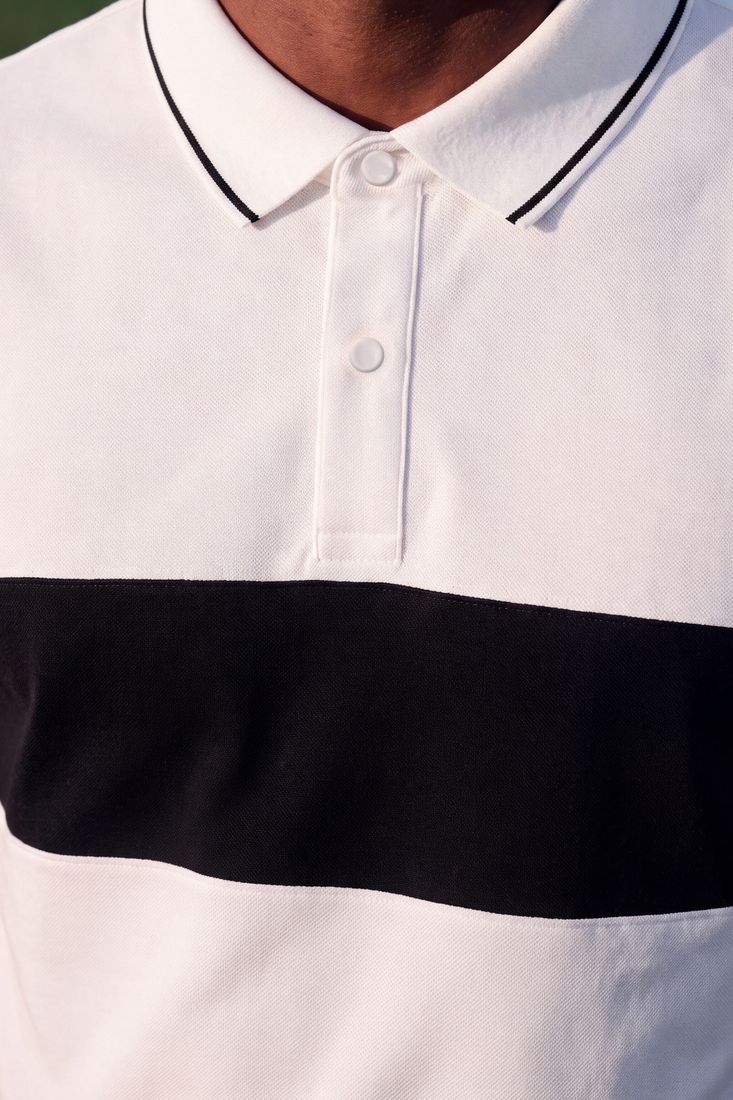
- It depends on contact area. Qmax depends heavily on how much skin touches the fabric surface: smooth, flat fabric touches more skin and usually scores higher than textured fabric.
- It can drop after washing. Chinese textile experts note that the cooling effect can fade over many washes, and advise caution with labels that only say "ice silk" or "ice feel" without test data.
How to read the label
- Ask for the actual qmax number, not just the word "cooling".
- Ask which standard was used (JIS L 1927 or GB/T 35263) and who did the testing.
- Compare it with the 0.15 W/cm² threshold: the further above it, the more noticeable the cool touch.
Qmax of WLAM styles
The figures below come from the manufacturer's fabric test reports and are listed on each product page:
| Style | qmax (W/cm²) |
|---|---|
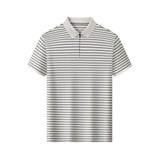
| 01W226 · Striped Zip Polo | 0.24 |
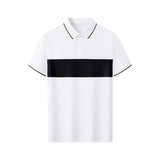
| 01W227 · Color-Block Polo | 0.23 |
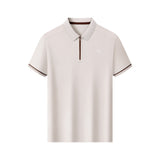
| 02W234 · Tipped Collar Zip Polo | 0.23 |
| 02W222 · Ribbed Polo | 0.22 |
| 01W228 · Contrast Trim Zip Polo | 0.20 |
| 01W229 · Contrast Trim V-Neck Polo | 0.19 |
All of them clear the 0.15 threshold of GB/T 35263. Style 01W226 reaches 0.24, about 60% above the threshold.